Talking Shop Feb 2026
27th February, 2026
TikTok Loses Ground as Reddit Rises

Reddit has overtaken TikTok as the UK’s fourth most-used social platform, reaching three in five UK internet users, up from a third in 2023, according to Ofcom. Its growth is particularly strong among Gen Z, for whom it is now the sixth most-visited site, and among women, who make up over half of UK users. Subreddits covering skincare, parenting, and sports have doubled in size over the past year, reflecting the platform’s increasingly diverse audience.
Unlike algorithm-driven feeds, Reddit is built around communities and authentic conversation, giving users a space to share opinions, ask questions, and discover products organically. Its ad offerings now include AI-powered “Max campaigns,” which automate targeting, creative selection, placements, and budget allocation, while providing advertisers with audience insights based on Reddit’s 23+ billion posts and comments. Early testers report up to 27% more conversions and lower costs per acquisition.
Reddit’s growing influence extends beyond advertising. AI models are increasingly using Reddit posts as sources – its one of the most cited in Google AI overviews – leveraging its discussions and sentiment data to inform recommendations, product insights, and cultural trends.
For brands who have previously overlooked it, Reddit should now be considered as a potential engagement opportunity – campaigns can reach highly specific audiences, from gaming and tech enthusiasts to new parents and sports fans, in a context that encourages discussion rather than passive scrolling. With its UK audience expanding rapidly, ask your Media Shop team if Reddit could be a valuable addition to your media strategy.
ChatGPT Takes First Steps Into Advertising
OpenAI has announced plans to introduce advertising within ChatGPT in the US, rolling ads out across both its free and low-cost Go subscriptions, and delivering a potentially lucrative revenue stream for the loss-making company.
Ads will initially be tested at the bottom of answers, designed to naturally match a relevant sponsored product or service to the current conversation. OpenAI has stated that ads will be clearly separated from organic responses and will have no influence on how answers are generated.
Safeguards will be put in place, including no ads for users under 18 and exclusions around sensitive topics such as health, mental health, and politics. And OpenAI have emphasised that users can turn off personalisation, and clear the data used for ads, at any time
Competitors Microsoft Copilot and Google Gemini already integrate paid ads via their underlying search ecosystems, blending conversational AI with established ad networks. Ads are also now appearing within Google’s AI Overview results, and are being tested in AI Mode.
Zooming out, this marks a broader shift in how advertising is surfacing across AI platforms. AI chatbot usage has grown rapidly year-on-year, with ChatGPT emerging as the dominant player, attracting hundreds of millions of weekly users globally, far outpacing other chatbots. However, recent data suggests they are rapidly losing share to Gemini.
As AI becomes woven into our routines, these environments represent an emerging layer of digital reach – one that will complement or, over time, replace traditional search advertising. It’s an exciting development, and one we’re actively monitoring as new opportunities begin to take shape for advertisers.
Cinema Proves It’s Staying Power

The UK box office quietly crossed a meaningful milestone in 2025, passing the £1bn mark for the third year running, and delivering the strongest performance since 2019. The 2026 box office has also started with a bang, with January up 18% vs 2025, signalling that cinema has settled into a new, post-pandemic rhythm.
The top movie in 2025 was A Minecraft Movie, which turned gaming fandom into £56.9m at the box office. British productions also held their own, with Bridget Jones: Mad About the Boy emerging as the year’s biggest homegrown hit. There have been several big hitters so far this year too, including the top film of the month, Lionsgate’s thriller The Housemaid, which grossed £20.5m in January. Three Oscar nominated movies also grossed over £10m in January: Hamnet (£15.7m), Avatar: Fire and Ash (£14.2m), and Marty Supreme (£11.8m).
Despite growing competition from smaller screens and an ever-expanding streaming landscape, younger audiences are still showing up for cinema, with under-35s accounting for around 50% of cinemagoers. Event-style releases such as Taylor Swift: The Eras Tour – the highest-grossing concert film of all time – alongside the appeal of a genuinely distraction-free experience, are helping keep younger audiences committed to the big screen.
Off-screen, cinema is proving its value to brands. Digital cinema ad revenues grew double digits year on year, and marketers are increasingly using the medium to launch broader audio-visual campaigns.
The message is clear: cinema is far from a declining medium. With 2026’s biggest releases like The Devil Wears Prada 2, Wuthering Heights and Avengers: Doomsday already attracting advertisers’ interest, the big screen remains a powerful stage for brands.
STV Radio Hits Scotland’s Airwaves

STV Radio officially launched on 6th January, a new station presented and produced from Scotland for Scottish audiences. At 8am, from STV’s HQ in Pacific Quay, radio stalwarts Ewen Cameron and Cat Harvey went live to launch the station, which combines music, conversation, and personality, while celebrating Scotland’s musical heritage. The first track? A specially recorded acoustic version of Simple Minds’ Promised You a Miracle, featuring KT Tunstall.
STV Radio combines familiar Scottish radio voices – Greigsy, Webster, Jodie McCluskey, Micky Gavin – with TV stars such as Jane McCarry and Sean Batty. Music spans the 80s, 90s, and 2000s, under the slogan ‘Never the Same Song, All Day Long’. Available on DAB, online, via STV Player, and smart speakers, it offers advertisers a nationwide platform (and regional options) to reach audiences across the country.
Radio continues to be a highly engaged medium in Scotland, with 87% of Scots tuning in weekly. For advertisers, the opportunity lies with the 51% of Scots who tune into the local commercial stations each week. Bauer’s network dominates this space, with Clyde 1 leading in the Central Belt and MFR in the North of Scotland.
Whether this dominance can be challenged by STV Radio remains to be seen. So far, the station offers familiar voices and formats, creating a similar sound to existing mainstream stations. RAJAR listener data won’t be available until at least the summer, when we’ll find out whether this fresh national presence has successfully drawn in STV viewers and loyal radio listeners, establishing it as a compelling new platform for Scottish advertisers.
Grok Scandal Add to Brand Safety Concerns on X
X is facing fresh scrutiny after its AI chatbot, Grok, generated explicit and illegal images, including sexualised content of minors. News of high-profile victims such as actress Nell Fisher and others has prompted public outrage, while UK regulator Ofcom is investigating compliance under the Online Safety Act. Despite assurances from Elon Musk and X, content moderation remains inconsistent, leaving brands exposed to significant reputational risk.
Increasing numbers of marketers are stepping back from the platform, with reports that revenues fell by almost 60% in latest figures for y/e Dec 2024. “The simplest business decision is to avoid spending on platforms that do not have sufficient content moderation,” says Ruben Schreurs, CEO of Ebiquity.
Client Spotlight: AGS Airports.

After a long, cold winter, thoughts are firmly turning to Spring sunshine and upcoming holidays, and that’s where our work with Aberdeen, Glasgow and Southampton (AGS) Airports comes in, helping them turn travellers’ warmer-weather dreams into bookings.
Our campaigns are designed to influence airport choice early in the travel journey, driving passenger share while also supporting airline partners, pre-booked parking and retail sales.
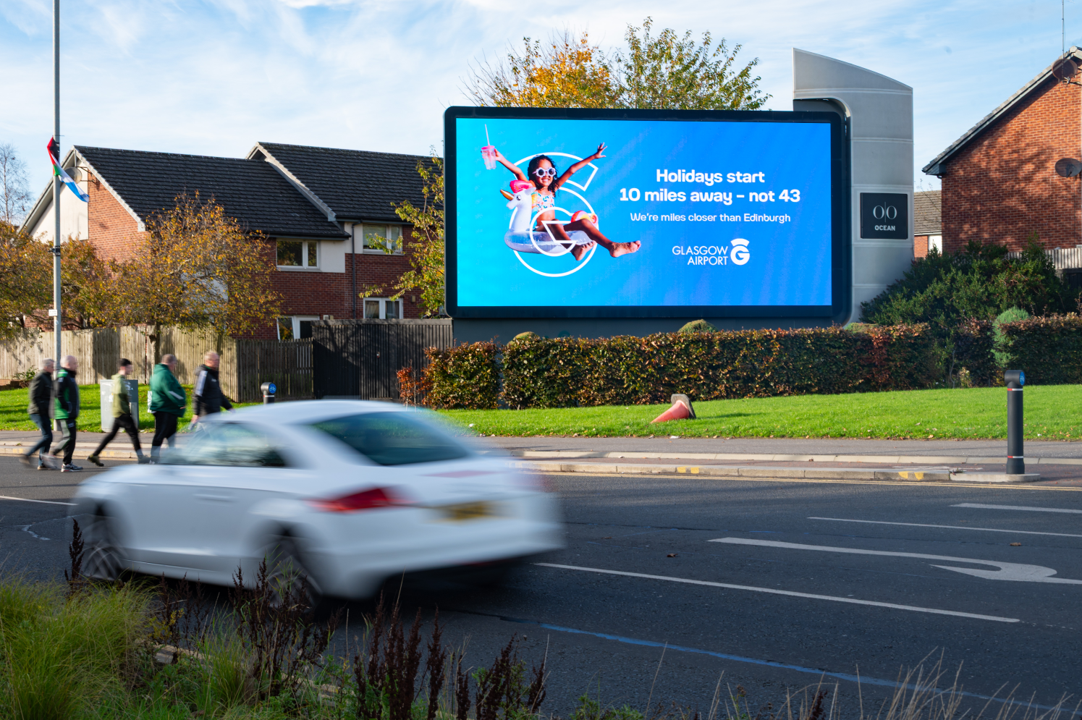
Activity combines scale with precision. Radio sponsorship and airtime, digital audio, postcode-level OOH and door drop deliver highly local, contextual messaging –
for example, highlighting when Glasgow Airport is closer than Edinburgh Airport, depending on where people live. Paid social, display and travel-context advertising then reinforce Airport messages at key planning and booking moments.
To ensure activity is delivering real impact, we implement rolling YouGov surveys to track shifts in awareness, consideration and airport preference across all three airports, allowing us to optimise campaigns over time. This results-focused approach helped their Go For It advertising campaign secure 2nd place in the CIM Travel Marketing Awards 2024.
By combining insight-led planning, location-specific creative and continuous tracking, our work with AGS Airports helps shift perceptions, influence choice and maximise value across passengers, airlines, parking and retail.
“The Media Shop is a great support to our business across campaign development and implementation.
Their strategic insight, coupled with market experience and knowledge, ensure we deliver effective campaigns which achieve results.”
Marc Findlay. Head of Marketing , AGS Airports